


What High-Performing Organizations Expect from an LMS in 2026
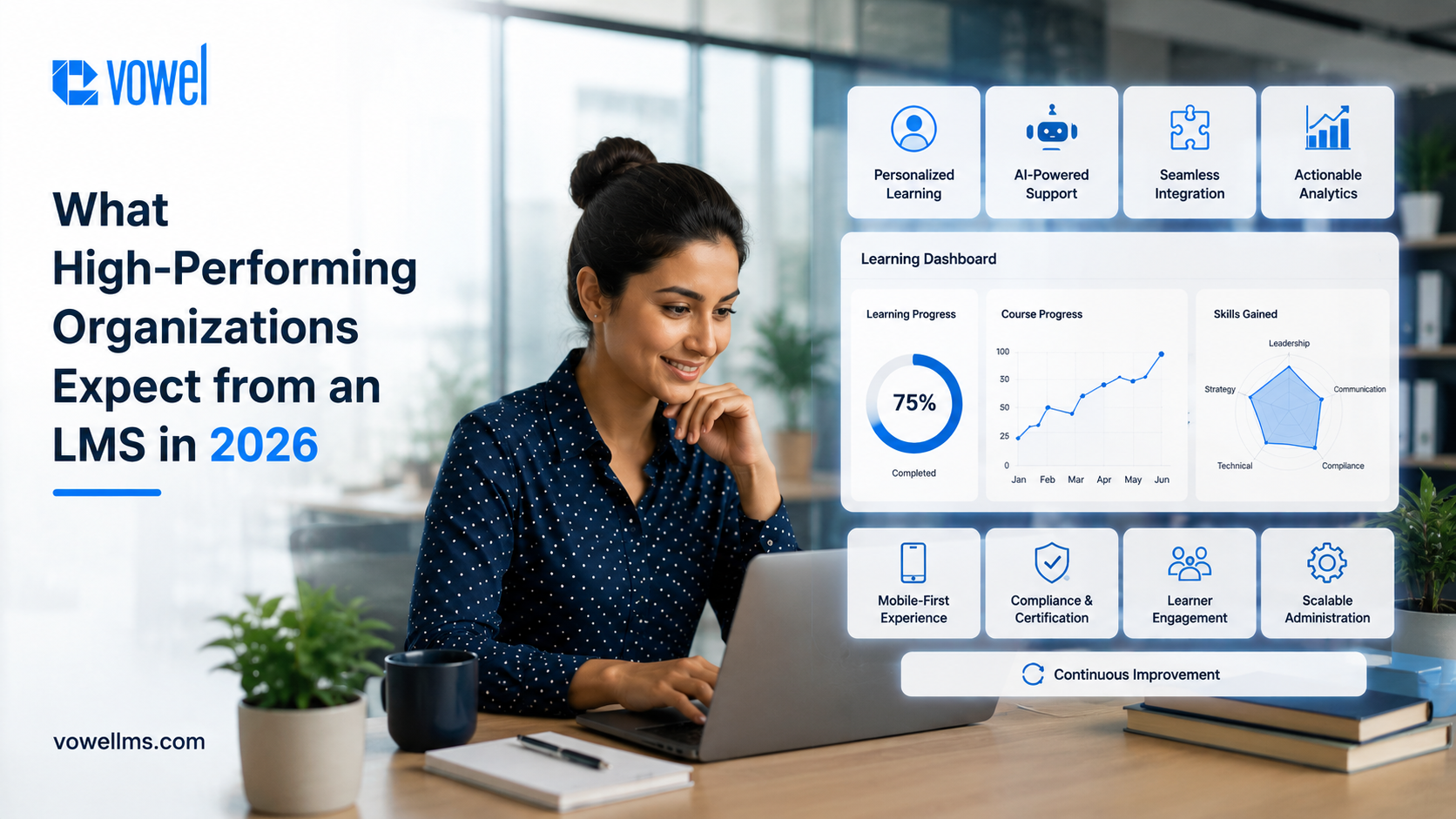
In 2026, an LMS is no longer just a place to upload courses and track completions. For high-performing teams, it isa strategic growth system: one that connects learning to business outcomes, supports employees in the flow of work, and gives leaders the visibility they need to make smarter talent decisions. This guide explains what high-performing organizations expect from an LMS in 2026 and how those expectations shape selection and success.
The expectations are higher because the workplace is more complex. Employees need faster upskilling, managers need practical insights, and organizations need learning technology that can adapt as priorities change. The best LMS platforms now function as hubs for performance, compliance, onboarding, engagement, and continuous development.
Below are the core LMS capabilities high-performing organizations are prioritizing in 2026, along with what each one means in practice.
1. Personalized learning paths that adapt to each role
Generic training libraries are nolonger enough. High-performing organizations expect an LMS to deliver personalized learning experiences based on role, department, skill level, career path, location, and performance goals.
Instead of assigning the same content to everyone, modern learning teams want systems that can guide each employee toward the most relevant next step. That may include onboarding modules for a new hire, leadership development for a first-time manager, technical training for a specialist, or compliance refreshers for a regulated team.
A strong LMS should support:
- Role-based learning journeys
- Skill-based course recommendations
- Adaptive content sequencing
- Prerequisites and branching logic
- Individual development plans
- Manager-assigned learning goals
This level of personalization helps employees see training as useful rather than mandatory. It also makes learning time more efficient because people are not forced through content they already know or do not need.
For organizations seeking effective training solutions, personalization is one of the clearest ways to improve relevance, engagement, and completion quality.
2. AI-powered support without losing human oversight
Artificial intelligence is now a major expectation for innovative learning platforms, but high-performing organizations are not looking for automation for its own sake. They want AIthat improves the learning experience while keeping people in control.
In an LMS, AI can help by recommending content, summarizing learning materials, generating quizzes, identifying skill gaps, translating content, assisting administrators, and helping learners find answers faster. However, organizations also want transparency, governance, and quality control.
The most valuable AI features are those that reduce manual work and improve decision-making. For example, an administrator may use AI to tag content, build a draft learning path, or surface employees who may need additional support. A learner may use AI search to find a specific policy, process, or training resource at the moment of need.
High-performing organizations expect AI features to be:
- Easy to review and edit
- Secure and permission-aware
- Aligned with company policies
- Connected to approved learning content
- Helpful for both learners and administrators
- Designed to support, not replace, expert judgment
In 2026, the strongest LMS platforms use AI to make learning faster, smarter, and more scalable while preserving trust.
3. Seamless integration with the workplace tech stack
An LMS cannot operate as a disconnected system. High-performing organizations expect learning technology to integrate with the tools employees and administrators already use.
That includes HR systems, identity providers, communication tools, performance management platforms, customer relationship management systems, content libraries, business intelligence tools, and collaboration platforms. The goal is to reduce duplicate work, improve data accuracy, and make learning easier to access.
Useful integrations may include:
- Single sign-on for simple access
- HRIS syncing for employee data and reporting lines
- Calendar integrations for live training sessions
- Communication app notifications and reminders
- Performance system connections for development goals
- CRM or support tool integrations for sales and service enablement
- Data exports to analytics platforms
When integrations work well, learning becomes part of the employee experience rather than a separate destination. New hires can be automatically enrolled in onboarding. Managers can view team progress without requesting manual reports. Employees can receive training reminders in the tools they already check each day.
In high-performing organizations lms2026 strategies, integration is not a technical bonus. It is a core requirement.
4. Actionable analytics that connect learning to outcomes
Completion rates still matter, but they are no longer enough. High-performing organizations want LMS analytics that show whether learning is improving performance, reducing risk, speeding upon boarding, increasing productivity, or supporting business goals.
Modern learning leaders need dashboards that go beyond activity tracking. They want to understand what is working, where learners are struggling, which teams need support, and how training investments are influencing outcomes.
An effective LMS should make it easy t o monitor:
- Enrollment and completion trends
- Assessment performance
- Time to completion
- Learner engagement
- Skills progress
- Certification status
- Manager and department-level results
- Content effectiveness
- Knowledge gaps
- Compliance risk areas
The best analytics are clear, timely, and practical. Leaders should be able to move from insight to action quickly. For example, if a team consistently scores low on a safety assessment, the LMS should help identify the issue and support follow-up training. If onboarding completion correlates with faster ramp time, leaders should be able to see that connection.
In 2026, high-performing organizations expect learning data to support strategic workforce planning, not just administrative reporting.
5. Mobile-first and accessible learning experiences
Employees are not always sitting at a desk when they need training. Frontline workers, remote employees, sales teams, field staff, and busy managers all need flexible access to learning.
That is why high-performing organizations expect an LMS to provide a mobile-first experience that works across devices. Learners should be able to start a course on a laptop, continue on a phone, review a resource on a tablet, or complete a quick knowledge check between tasks.
Mobile learning is especially valuable when content is short, practical, and easy to navigate. Microlearning modules, checklists, short videos, job aids, and searchable resources can help employees apply knowledge immediately.
Accessibility is equally important. An LMS should support inclusive learning through features such as:
- Responsive design
- Keyboard navigation
- Screen reader compatibility
- Captions and transcripts
- Clear visual contrast
- Adjustable playback controls
- Multilingual options where needed
- Simple, consistent navigation
High-performing organizations understand that accessible learning is better learning. When more employees can use the LMS confidently, training becomes more equitable, scalable, and effective.
6. Fast content creation and easy course management
Learning teams are under pressure to move quickly. Policies change, products launch, compliance requirements evolve, and skills become outdated. An LMS must help teams create, update, and distribute content without unnecessary friction.
In 2026, organizations expect course management tools that are intuitive enough for administrators, subject matter experts, and department leaders to use effectively. They want to reduce dependence on long production cycles for every training need.
Valuable content management capabilities include:
- Drag-and-drop course builders
- Reusable templates
- Version control
- Bulk uploads and edits
- Assessment creation tools
- Multimedia support
- Content tagging and search
- Approval workflows
- Automated enrollment rules
- Expiration and recertification settings
Speed should not come at the expense of quality. A strong LMS makes it easier to maintain consistency, update outdated materials, and ensure learners always see the most current approved content.
This is a major reason innovative learning platforms are becoming central to agile organizations. The faster a company can turn knowledge into usable training, the faster employees can respond to change.
7. Strong compliance, certification, and audit readiness
For many organizations, compliance is one of the most important LMS use cases. High-performing teams need more than a basic completion checkbox. They need reliable systems that support regulatory training, internal policy education, certification tracking, and audit preparation.
An effective compliance-focused LMS should support:
- Automated training assignments
- Recurring certification cycles
- Expiration alerts
- Digital records of completion
- Assessment tracking
- Policy acknowledgments
- Role-based compliance rules
- Audit-ready reporting
- Secure data storage
The value is not only in proving that training happened. It is also in reducing operational risk. When the LMS can automatically notify learners, managers, and administrators about upcoming requirements, organizations are less likely to miss critical deadlines.
High-performing organizations also expect compliance learning to be user-friendly. Employees should understand what is required, why it matters, and how to complete it without confusion. Clear design and automated workflows help make required training less burdensome for everyone involved.
8. A learner experience that drives engagement
Even the most advanced LMS will fail if employees do not want to use it. High-performing organizations expect learning platforms to be intuitive, engaging, and easy to navigate.
The learner experience should feel modern and focused. Employees should be able to find assigned courses, browse recommended content, track their progress, and return to unfinished learning without frustration. Search should work well. Course pages should be clear. Notifications should be helpful rather than overwhelming.
Engagement features may include:
- Progress indicators
- Learning playlists
- Badges or certificates
- Discussion prompts
- Peer learning opportunities
- Manager feedback loops
- Short assessments
- Practical exercises
- Recognition for milestones
However, engagement is not just about gamification. The best LMS experiences are engaging because they are relevant, useful, and respectful of employees' time. A clean interface, strong content, and clear purpose often matter more than flashy features.
Effective training solutions help learners answer one simple question: "How will this help me do my job better?" When the LMS makes that answer obvious, engagement improves naturally.
9. Scalable administration for complex organizations
As organizations grow, LMS administration can become complicated. Different teams may need different training rules, languages, permissions, branding, reports, and workflows. High-performing organizations expect an LMS to scale without becoming difficult to manage.
This is especially important for companies with multiple locations, business units, franchise networks, partner programs, or global teams. Administrators need control and flexibility without having to rebuild processes manually each time.
Scalable LMS administration often includes:
- Automated user provisioning
- Custom roles and permissions
- Group-based enrollment rules
- Department or region-specific learning portals
- Multi-language support
- Custom reporting views
- Delegated administration
- Branded learning environments
- Automated reminders and escalations
The best systems help central teams maintain standards while allowing local teams to manage their specific needs. This balance is critical for consistency, efficiency, and governance.
In 2026, a scalable LMS should make complexity easier to manage, not add another layer of administrative burden.
10. Skills development tied to workforce planning
High-performing organizations are placing greater emphasis on skills. They want to know what capabilities they have today, what capabilities they will need next, and how learning can close the gap.
An LMS can support this shift by connecting learning content to skills, competencies, roles, and career pathways. Instead of simply assigning courses, organizations can build structured development plans that help employees grow in ways that align with business needs.
Useful skills-focused LMS capabilities include:
- Skills mapping
- Competency frameworks
- Self-assessments
- Manager assessments
- Recommended learning by skill gap
- Career path visibility
- Progress tracking by capability
- Reporting on workforce readiness
This approach benefits both the organization and the employee. Leaders gain a clearer view of talent strengths and gaps. Employees gain more transparency into how they can grow, advance, or prepare for new opportunities.
For high-performing organizations, learning is not separate from talent strategy. It is one of the main ways the organization builds future readiness.
11. Flexible support for blended learning
While digital training is essential, many organizations still rely on instructor-led sessions, workshops, coaching, webinars, simulations, and hands-on practice. A modern LMS should support blended learning without forcing teams into a single format.
High-performing organizations expect the LMS to coordinate multiple learning methods in one place. A leadership program, for example, may include self-paced modules, live workshops, manager check-ins, peer discussion, assignments, and post-training assessments.
Blended learning features may include:
- Virtual and in-person session scheduling
- Attendance tracking
- Waitlists and capacity limits
- Instructor tools
- Calendar invitations
- Pre-work and post-work assignments
- Cohort-based learning paths
- Feedback surveys
- Coaching documentation
This flexibility allows organizations to choose the right format for each learning goal. Some topics are best delivered through quick digital modules. Others require discussion, practice, and feedback. A strong LMS supports both.
12. Security, privacy, and reliability by design
An LMS contains sensitive information, including employee records, assessment results, certifications, learning histories, and sometimes customer or partner data. High-performing organizations expect strong security and privacy controls as a baseline.
Important capabilities include:
- Secure authentication
- Role-based access controls
- Data encryption
- Permission management
- Reliable uptime
- Backup and recovery processes
- Privacy-conscious data handling
- Clear administrative controls
- Vendor transparency
Security should not make the LMS difficult to use, but it must be built into the platform from the start. Organizations need confidence that the system can support internal requirements, protect learner data, and remain dependable as usage grows.
Reliability is also part of trust. If employees cannot access training when they need it, or administrators cannot retrieve accurate records, the LMS becomes a source of friction. High-performing organizations look for platforms that are stable, secure, and ready for scale.
13. Continuous improvement built into the learning strategy
The best organizations do not treat LMS implementation as a one-time project. They use the platform as part of an ongoing improvement cycle.
That means reviewing analytics, gathering learner feedback, updating content, testing new formats, refining learning paths, and aligning training priorities with business needs. The LMS should make this process easier by giving teams the tools to measure, adjust, and improve.
A continuous improvement mindset may include:
- Regular content audits
- Learner satisfaction surveys
- Manager feedback reviews
- Assessment analysis
- Usage trend monitoring
- Training impact discussions
- Updates based on business changes
- Retirement of outdated content
High-performing organizations understand that an LMS is only as effective as the strategy behind it. Technology creates the foundation, but ongoing optimization creates long-term value.
What this means for LMS decision-makers in 2026
Choosing or improving an LMS in 2026 requires looking beyond basic features. The right platform should help the organization deliver learning that is personalized, measurable, accessible, secure, and aligned with performance.
The strongest LMS strategies focus on practical business questions:
- Can employees find and complete the right training quickly?
- Can managers see where their teams need support?
- Can administrators automate repetitive work?
- Can leaders connect learning activity to meaningful outcomes?
- Can the platform scale as the organization changes?
- Can the LMS support both compliance and growth?
When these questions guide the selection process, organizations are more likely to build learning ecosystems that create real impact.
High-performing organizations do not expect an LMS to simply store content. They expect it to accelerate capability, improve readiness, reduce risk, and support a culture of continuous learning. In 2026, that is the standard for effective training solutions and the defining promise of truly innovative learning platforms.
.png)