


Best LMS Platforms for Enterprise in 2027: Top Tools and Features to Compare
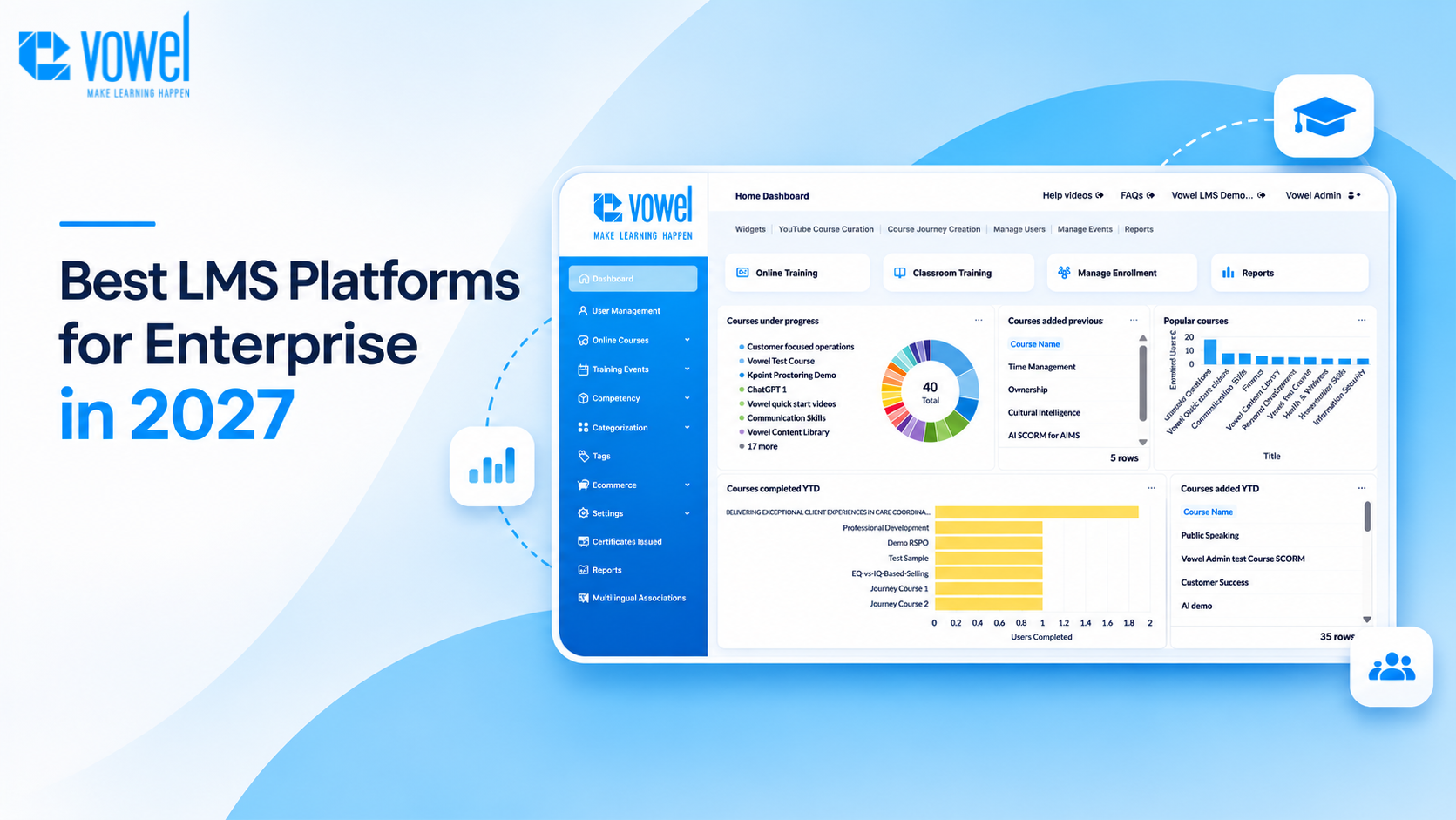
As enterprises expand, employeetraining becomes more complex. Organizations need to onboard employees, managecompliance training, develop workforce skills, and deliver consistent learningexperiences across departments and locations.
An enterprise Learning ManagementSystem (LMS) helps businesses centralize training, automate learningadministration, and track progress. Modern platforms are also incorporatingAI-powered learning, personalized content, and analytics to help employeesapply knowledge at work.
With multiple LMS platformsavailable, choosing the right one depends on your workforce, learning goals,integrations, and budget. This guide compares leading enterprise LMS platformsand the features businesses should consider.
6Best LMS Platforms for Enterprise in 2027
The following platforms addressdifferent enterprise learning requirements. This is a shortlist for comparison,not a definitive ranking.
1.Vowel LMS
Best for: AI-supported learning andknowledge reinforcement
Vowel LMS combines learningdelivery, AI-supported assistance, reinforcement, and analytics in oneplatform.
Key features include:
- AI-powered learning assistants and contextual nudges
- Course creation and learning paths
- Virtual classrooms and instructor-led training
- Assessments, quizzes, and social learning
- Reporting, analytics, and skill-progress tracking
- Mobile learning and enterprise integrations
Vowel LMS is worth evaluating ifyour organization wants to move beyond course completion and support continuouslearning, knowledge retention, and measurable progress.
2.Disprz
Best for: Workforce skilling andemployee development
Disprz focuses on employee learning,skill development, and workforce transformation. Its platform supportspersonalized learning experiences, mobile learning, and skills-relatedinsights.
It may suit enterprises looking toconnect training programs with workforce capabilities and employee development.
3.Docebo
Best for: Scalable learning acrossmultiple audiences
Docebo supports enterprise learningfor employees, customers, and partners. Its capabilities include learningmanagement, AI-supported features, integrations, and learning analytics.
It is worth considering fororganizations managing training across multiple teams, regions, or learnergroups.
4.SAP Success Factors Learning
Best for: Enterprises using SAP HRsolutions
SAP SuccessFactors Learning supportsemployee development, compliance training, and learning administration. Itsintegration with the broader SAP ecosystem can be valuable for organizationsseeking alignment between HR and learning processes.
5.Cornerstone Learning
Best for: Large organizations withcomplex learning requirements
Cornerstone offers enterpriselearning and workforce development capabilities. Organizations can evaluate itfor compliance training, certifications, skills development, and learningadministration.
It may be suitable for enterpriseswith extensive training programs and broader talent development needs.
6.360Learning
Best for: Collaborative andexpert-led learning
360Learning emphasizes collaborativelearning, enabling subject-matter experts to create and share knowledge acrossorganizations.
Its platform supports coursecreation, peer learning, and learning management. It may suit enterprises thatwant to encourage internal knowledge sharing and continuous development.
Essential Features to Look for in an Enterprise LMS
Before choosing an LMS, evaluatethese five areas.
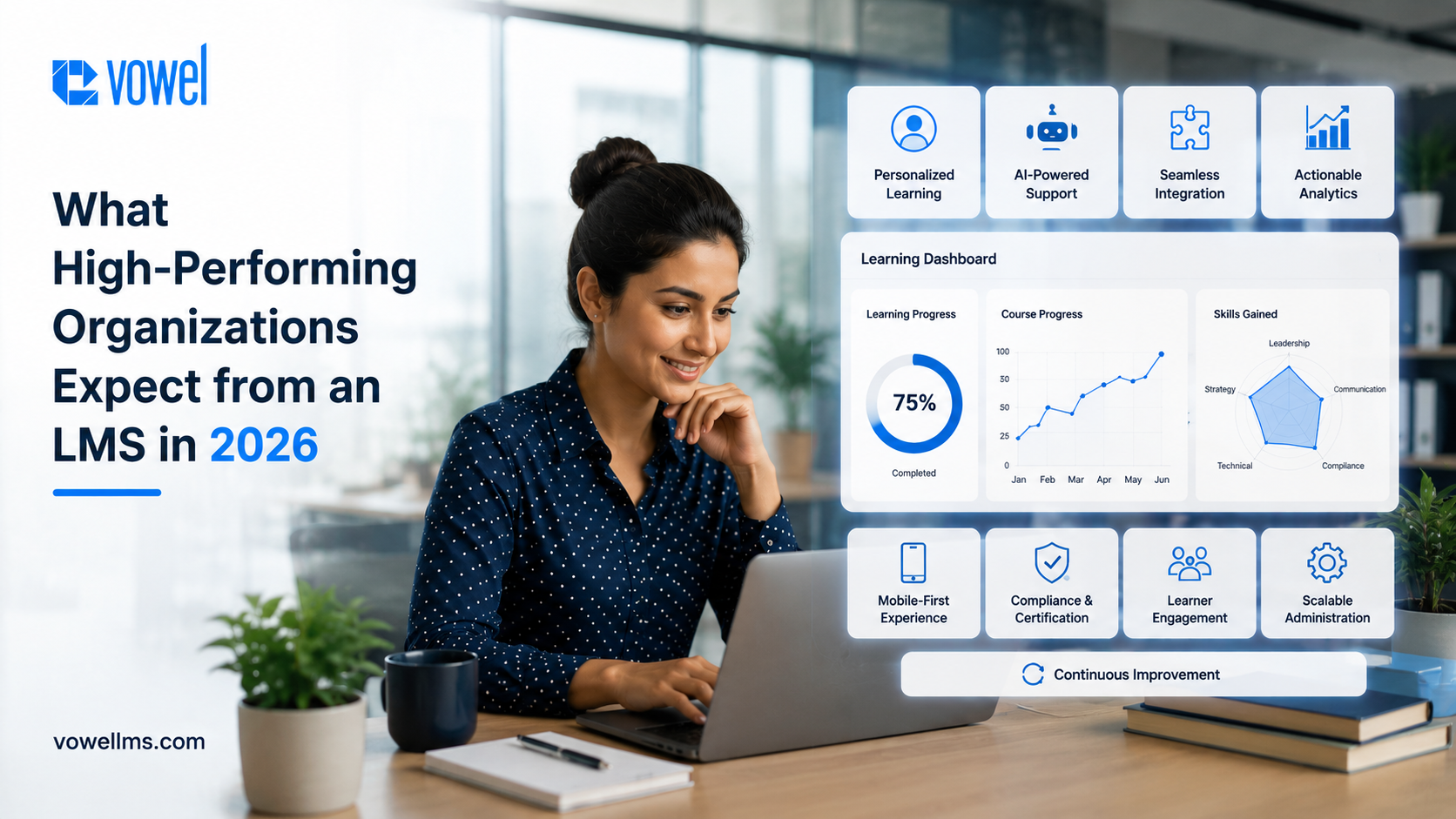
1. AI and personalized learning:Look for relevant learning recommendations, contextual assistance, andreinforcement that helps employees apply knowledge.
2. Learning management and automation:The platform should simplify onboarding, course assignments, assessments,reminders, and training administration.
3. Reporting and analytics: Checkwhether it tracks learner engagement, course completion, assessment results,and skill development.
4. Integration and security:Evaluate HRMS integrations, single sign-on, APIs, access controls, and securityrequirements.
5. Scalability and mobile access:Ensure the LMS can support additional teams, locations, learner groups, andmobile users as your organization grows.
How to Choose the Right Enterprise LMS
Follow these steps to make a moreinformed decision:
- Define your objectives: Identify whether your priority is onboarding, compliance, employee upskilling, leadership development, or partner training.
- Assess your workforce: Consider employee numbers, locations, roles, and learning requirements.
- Compare platforms: Shortlist vendors based on essential features, integrations, usability, and security.
- Request demonstrations: Test realistic training scenarios and review the experience for learners and administrators.
- Evaluate total costs: Include licensing, implementation,integrations, content development, and ongoing support.
- Measure success: Track appropriate indicators such as assessment performance, knowledge retention, completion, and workplace outcomes.
The right LMS should fit yourlearning strategy rather than simply offer the largest number of features.
Why Consider Vowel LMS for Enterprise Learning?
Enterprise training should helpemployees do more than complete assigned courses. Organizations also need toreinforce knowledge, provide support when employees need it, and understandwhether learning is progressing.
Vowel LMS brings together learningdelivery, AI-supported assistance, timely reinforcement, assessments, andanalytics. It supports different learning formats, including digital courses,instructor-led sessions, virtual classrooms, onboarding, and on-the-joblearning.
For enterprises seeking a unifiedlearning platform that supports continuous learning and measurable progress,Vowel LMS is worth exploring.
Learn more about the VowelLMS platform.